Retail shopfronts
Fascias, stallrisers, frames, doors and surrounds. Typically the fastest way to bring a dated unit into line with a current brand look without touching the structure.
Transformation Guide
Refitting a frontage means closed doors and lost trade. Respraying it means an evening or a weekend, your brand colour matched, and a unit that opens as normal the next morning.
For a trading unit, the real cost of a frontage refit is rarely the contractor's invoice. It is the days the doors are shut, the hoarding on the pavement, and the customers who walked past and went somewhere else. A replacement roller shutter alone is £1,000 to £2,500 installed and closes your unit while it is fitted.
Spray refinishing changes that calculation. The shutter, frontage, cladding or joinery you already have is prepared and recoated in place, usually out of hours, in your brand colour. You lock up in the evening and open the next morning with a frontage that looks new.
The same logic applies to landlords and letting agents on tenancy turnarounds, where the gap between tenants is the expensive part, and to maintenance companies who need a spraying capability they can put their own name to.
Sectors and surfaces
Different substrates need different systems. What they have in common is that refinishing in place is faster and cheaper than replacing.
Fascias, stallrisers, frames, doors and surrounds. Typically the fastest way to bring a dated unit into line with a current brand look without touching the structure.
Faded, tagged or rusted shutters brought back and recoated, or changed to a brand colour. The slat profile and the way the curtain rolls both need handling carefully, which is why these are surveyed rather than price-listed.
Metal and composite cladding panels, canopies and signage trays. Large surfaces where replacement cost is high and refinishing cost is not.
Reception desks, fitted units, doors and internal joinery can be assessed for refinishing. Protection, access restrictions and the return-to-use period are agreed before work starts.
Tenancy turnaround work on kitchens, doors and frames, priced across a portfolio rather than job by job. The aim is to shorten the void period, not just to repaint.
White-label spraying capability for maintenance and facilities companies who need the finish without carrying the equipment or the specialism in house.
The process
The technical process mirrors domestic work. What differs is the scheduling, the access planning and the coordination with everyone else on site.
Substrates are identified, dimensions taken, access assessed and the trading pattern understood. The working window is agreed at this point, whether that is an evening, a weekend or a slot in a wider shopfitting programme.
Brand colour matched to the nearest RAL reference, or from a physical sample or an existing painted element. Where a Pantone has no exact RAL equivalent you get an honest assessment of how close the match will be, before anything is ordered.
Glazing, signage, lighting, stock and neighbouring surfaces are protected as required. The work area and any pedestrian controls are agreed with you. Safe access and reopening depend on the site assessment and coating requirements.
Degreasing, keying, rust treatment on metal, and an adhesion system matched to the material, whether that is steel shutter, aluminium cladding, composite panel or timber joinery. Preparation is the majority of the labour.
Metalwork and commercial surfaces are specified per project, with SDS and COSHH data available on request. Commercial surfaces take more abuse than domestic ones. That is why the system is chosen for the surface and its use, not taken from a decorative range.
Masking removed, shutters and doors operated to confirm nothing is impeded, site cleaned and handed back ready to trade. Written finish guarantee issued on completion.
Why refinishing works commercially
Out-of-hours and weekend working means the unit does not close. For most retail and hospitality sites this is the entire argument, and it usually outweighs every other consideration.
A replacement roller shutter is £1,000 to £2,500 installed. Refinishing the one you have avoids both the capital cost and the closure it brings with it.
One RAL specification can be applied across multiple properties so a portfolio actually looks like a portfolio, rather than a collection of near-misses.
Landlords, agents and property managers can have work priced across several properties, which suits tenancy turnarounds where speed between tenants matters more than anything else.
Maintenance and facilities companies can offer spray refinishing under their own name without buying equipment or hiring the specialism.
£6,000,000 public liability cover through Simply Business, with the certificate published on the site. The person who quotes the job is the person who sprays it, so there is no subcontractor gap to argue about afterwards.
Reference imagery
Colour and finish references showing how coatings behave on shutters and commercial substrates. Not photographs of ProFinish customer sites.
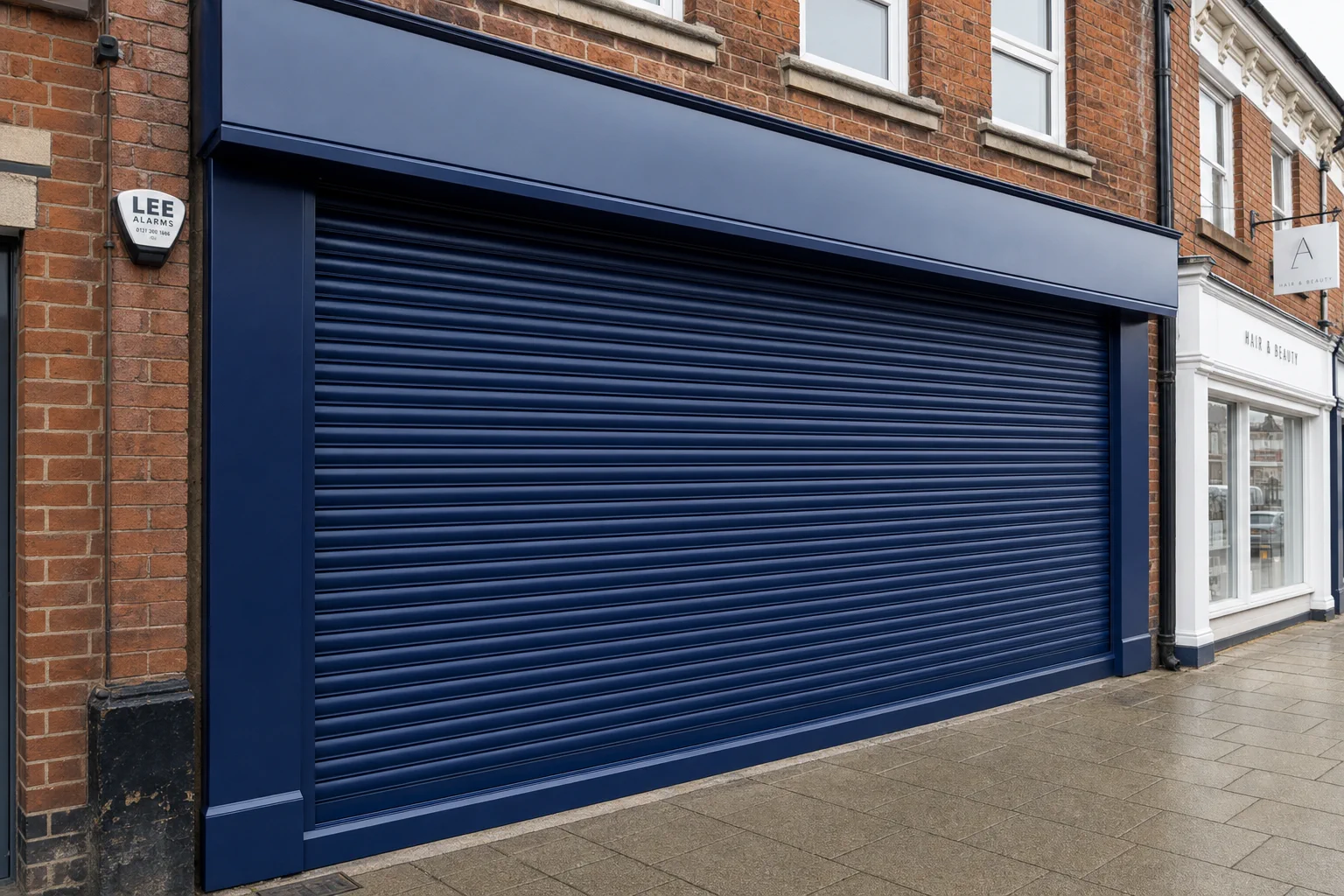
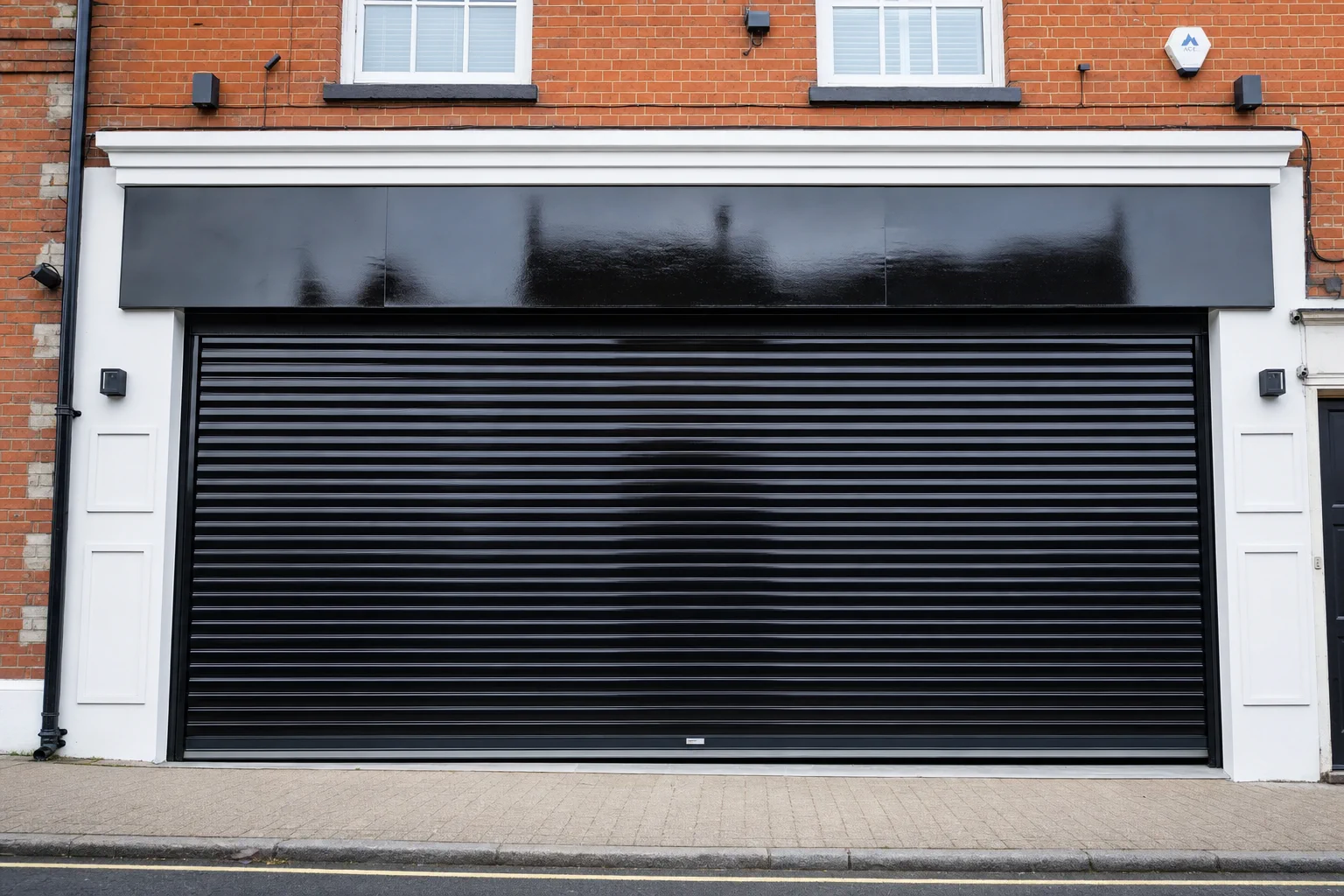
The images above are colour and finish references used to show how a shade reads on a surface. They are not photographs of ProFinish customer projects. Genuine ProFinish work is published in Our Work as each job is completed and the customer is happy for it to be shown.
Pricing factors
Commercial work is quoted on survey rather than from a price list. These are the factors that actually move the number.
The starting point. Metal, composite, timber and previously coated surfaces each need a different system and a different amount of preparation.
Shutters and cladding that have been tagged, damaged or allowed to rust need considerably more taking back and treating. This is usually the largest single variable on a frontage job.
Evening, overnight and weekend working is available and is priced accordingly. It is almost always cheaper than the trade lost by closing during the day, which is the comparison worth making.
Pavement licences, height access, shared frontages, occupied neighbouring units and site induction requirements all add time. All of it is identified at survey rather than raised later as an extra.
A single RAL across the frontage is straightforward. Multiple brand colours, logo elements, cut lines and signage detail each need separate masking and spray sessions.
Portfolio and multi-site work is priced as a programme rather than as isolated jobs, because setting up once for several properties is materially more efficient than mobilising repeatedly.
An even, hard-cured finish across the whole surface with no brush marks or runs, and a colour that matches your specification rather than approximately resembles it. Shutters and doors run through their full travel exactly as before, because the mechanism was masked rather than coated.
No overspray on glazing, signage, lighting, pavement or neighbouring units, and the site left clean and ready to trade. On interior work, the containment comes out with the dust inside it rather than distributed through the space.
You get a written finish guarantee on completion, issued by the person who did the work. Public liability cover of £6,000,000 through Simply Business is in place and the certificate is published on the site rather than described.
Questions
Send photos of the frontage or the surfaces involved, rough dimensions, your brand colour reference if you have one, and the hours the work would need to happen in. You will get a straight figure and a realistic programme.