uPVC doors
Front doors, back doors, French doors and bifolds. The classic candidates are chalky white and dated brown. uPVC needs a plastics adhesion system, which is the entire difference between a lasting finish and a peeling one.
Transformation Guide
A front door is the first thing anyone sees and the smallest surface area on the front of a house. That combination makes it the best value change per pound. Here is how it is done properly.
A replacement composite front door runs £1,000 to £1,500 fitted. Most of the doors people replace are mechanically perfect: the multipoint lock works, the seals are intact, the door is square in the frame and secure. What has gone wrong is that the colour has faded on the sunny side, or the door is the colour the developer chose in 2009.
Spraying changes the appearance of the door you already own, on the hinge, in a day, from £395. It keeps the lock, the frame, the glazing and the fit, all of which are the parts that actually matter for security and weathering.
There is a reason this is such a common first job. It is a small, contained, low-risk way to change how a house looks, and it is the single change most likely to make a frontage look deliberately maintained rather than neglected.
Suitability
Door type changes the preparation, not the possibility. What rules a door out is mechanical failure, not material.
Front doors, back doors, French doors and bifolds. The classic candidates are chalky white and dated brown. uPVC needs a plastics adhesion system, which is the entire difference between a lasting finish and a peeling one.
Faded composite is extremely common on south-facing elevations, and manufacturers cannot renew the colour. Spraying is the realistic fix, and it also lets you change colour entirely rather than matching the original.
Solid timber sprays beautifully and takes a very high-quality finish. Bare or previously painted both work, though timber needs any rot or splits made good first, since coating never fixes wood.
Often forgotten, and cheap to include while set up on site. Doing them at the same time as the front door costs far less than a separate visit later.
If the multipoint lock has gone, the door has dropped, or it no longer seals against draughts, that is a mechanical repair or a replacement. Fix the function first, then consider the finish.
A cracked composite skin, a delaminating uPVC panel or a badly distorted door is replacement territory. You will be told plainly if that is the case.
The process
The door stays on its hinges throughout. Nothing is removed from your house and the doorway is never left open.
The door type, condition and hardware are checked, and the colour and sheen are confirmed. Whether the inside face is being done in the same colour or a different one is agreed now, because it changes the masking plan.
Exterior doors carry hand grease around the handle, road film and UV-chalked residue. All of it is removed. The area around the handle is where adhesion failures typically start, so it gets particular attention.
The surface is abraded to give the coating mechanical grip. On a faded composite or chalky uPVC door, this stage is also removing the degraded top layer so the coating bonds to sound material underneath.
Handles, letterplate, knocker, spy hole, hinges, locks, seals and glazing are all masked or removed and refitted. The frame, threshold, surrounding brickwork and porch floor are protected. This is most of the skilled time on a door.
A plastics-appropriate adhesion primer, then two coats in your chosen RAL colour and sheen. Exterior surfaces get a weather-resistant system matched to the substrate, confirmed in your quote. Both faces and the visible edges are coated, so the door does not betray its old colour when it swings open.
Masking is removed, hardware is refitted and checked for operation, and the door is inspected closed and open. It is secure and usable the same evening, and you get a written three-year exterior finish guarantee.
Colour and finish
RAL 7016 works against red brick, buff brick and render alike, which is why it has become the default. It reads as current without being a statement, and it pairs naturally with grey frames. See the anthracite uPVC guide for how it behaves.
RAL 9005 jet black is crisper and more formal, and it suits period frontages, render and Georgian glazing bars. It shows dust and water spotting more than grey, which is worth knowing on a roadside door.
Steel blue and moss green are the usual choices for people who want the door to be the accent on an otherwise neutral frontage. On a small surface like a door, a strong colour is a low-risk way to add character.
Satin is the standard and the most forgiving. Gloss gives a traditional, high-shine door and shows every imperfection in the substrate, so it needs a genuinely flat surface underneath. Matt is contemporary and shows hand marks around the handle more readily.
Dark outside, white or light grey inside is very common, because the street and the hallway are different design problems. It adds masking and a separate spray session, so raise it when getting a price.
Once your booking deposit is received you can ask for a sprayed sample panel in your chosen colour and finish, where practical. Worth doing with dark greys especially, since they shift a lot between overcast and bright light.
Reference imagery
Colour and finish references. These are not photographs of ProFinish customer doors.
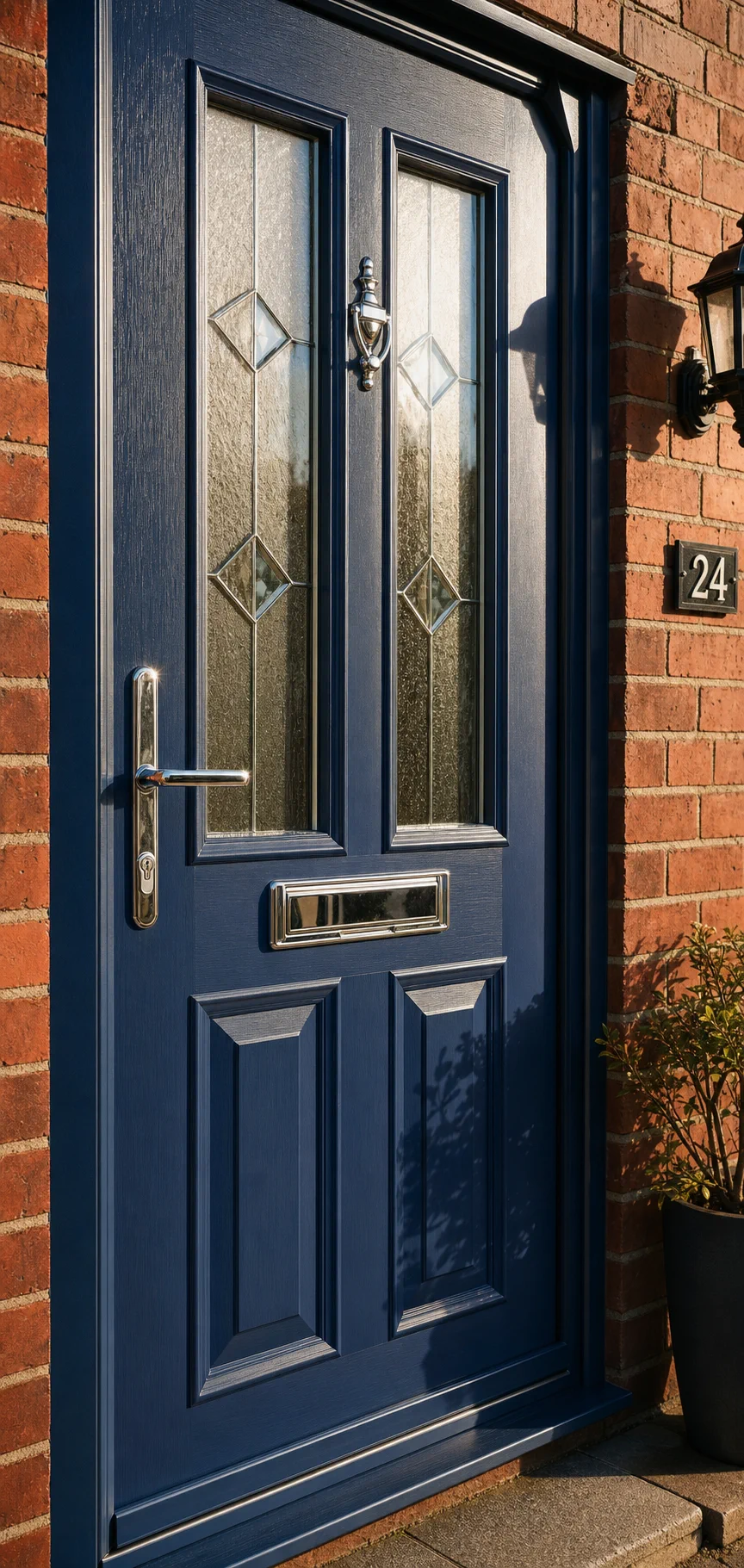
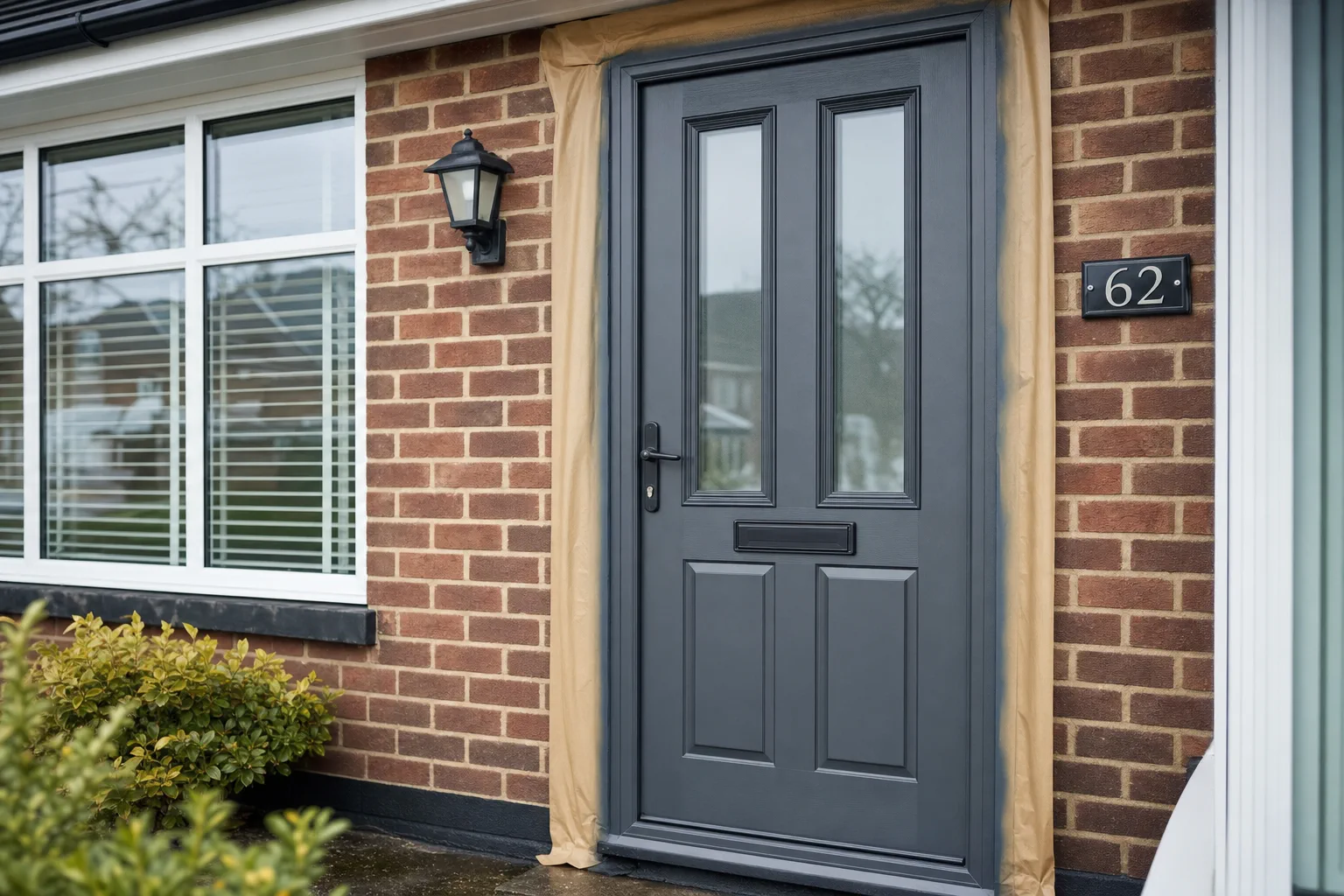
The images above are colour and finish references used to show how a shade reads on a surface. They are not photographs of ProFinish customer projects. Genuine ProFinish work is published in Our Work as each job is completed and the customer is happy for it to be shown.
Pricing factors
Doors start at £395. These are the factors that change the figure, and the bundles that make it better value.
A smooth uPVC door in reasonable condition is the baseline. A heavily chalked door, a textured woodgrain finish or a timber door needing repairs first all carry more preparation time.
A flat slab door is quick to mask. Multi-pane glazing, leaded effect, decorative panels and a separate side light each add masking and cutting-in time.
Both sides is standard at £395. Two different colours means separate masking and spray sessions, which is quoted accordingly rather than absorbed.
Spraying the door frame and any side panels at the same time is far cheaper than returning for them, and it also avoids a fresh door sitting in a tired frame, which tends to look worse than leaving both alone.
New handles, letterplate or knocker can be fitted while the door is masked and accessible. Mention it early so it is planned rather than improvised.
Have the frontage assessed together for a coordinated colour scheme and work plan. The final quote lists the number and size of surfaces, repairs, access requirements and expected duration. Larger frontages and double garages are quoted individually.
An even, factory-quality finish across the whole face with no brush marks, no runs and no sags, which on a vertical surface is entirely down to correct coating technique. The colour should be consistent across the door, the visible edges and the frame if the frame was included.
Hardware should be spotless and fully working. No coating on the handle, in the letterplate, around the lock barrel or on the hinges, and no overspray on the glass or the brickwork. The line where the door meets the seal should be clean, and the seals themselves should still be soft rather than stiffened with paint.
Follow the care instructions supplied for the selected exterior coating. Exterior work carries a written three-year finish guarantee, issued by the person who sprayed the door.
Straight answer on whether a sample makes sense for your job.
Questions
Send a straight-on photo of the door, a close-up around the handle, and a wider shot of the frontage so the colour can be considered in context. Jay reviews your photos and confirms a guide price and availability.